
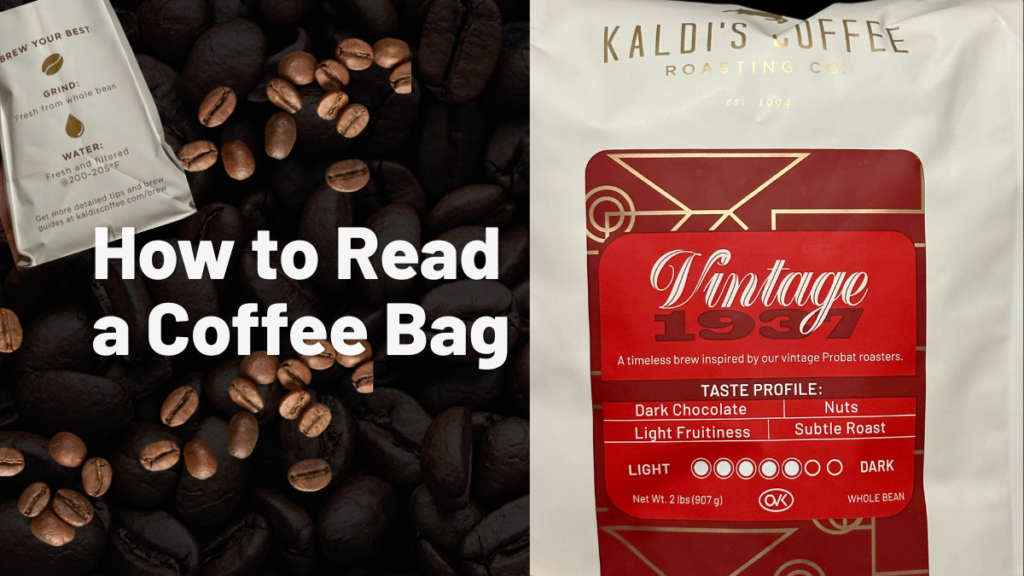
The coffee bag label has a lot of useful information.
How much or little information on the bag will depends on the brand.
Most coffee bags are sparse with their descriptions, instead, directing you to their website for more in-depth facts about their particular coffee ingredients and processing.
With that said…
Aside from the simple “best-by date,” the label’s information will help you determine the flavor profile, traceability, and brew suitability.
The coffee bag label shows:
- Roast Date
- Roast Level
- Bean Format
- Tasting Notes
- Origin
- Processing Method
- Variety
- Producer
- Elevation
- Certifications
- Net Weight
It’s the stuff that isn’t on the label that determines how the coffee will taste.
- How it was farmed
- Processing procedure
- Storage
- Roasting technique
- Grinding
- Brewing style
You won’t find that on the coffee bag.
The Five Details That Matter Most Before You Buy
#1. Roast Date
The roast date is more accurate than the “best-by date” because it tells you when the green coffee was roasted into a black-colored coffee bean.
Freshly roasted coffee releases carbon dioxide – a process known as degassing, which lasts several days, even weeks.
If it’s brewed too soon, there is an unstable extraction. This gives it a sour, muddy taste. But if you wait too long, the aroma is lost and the flavors are muted. It’s a delicate balance.
There is no perfect window of time when coffee is the “freshest.”
How it is roasted, packaged, and brewed will affect how quickly the coffee develops.
After opening the bag:
- Close the original package tightly or transfer the beans to an airtight container.
- Store the coffee in a cool, dry, dark location.
- Limit exposure to oxygen, heat, sunlight, and moisture.
- Buy an amount you expect to finish while the flavor still tastes fresh.
Remember that the use-by date isn’t based on when it was roasted, but a general estimate of when it will still be good for consumption.
#2. Roast Level
Roast level is what truly determines 90% of the flavor profile:
- Light roast: Brighter acidity with more floral, fruit, tea, or citrus characteristics.
- Medium roast: A balance of acidity, sweetness, body, and roasted flavor.
- Dark roast: More roast-driven flavors, bitterness, smoke, toast, and lower perceived acidity.
Light, medium, and dark roasts aren’t an exact science here.
One roaster’s medium roast might resemble another roaster’s dark roast.
The roast level does not impact the caffeine level.
The type of bean, coffee dose, grind size (fine or coarse), brewing method, extraction yield, and the serving size obviously impact the caffeine content.
#3. Whole Bean or Ground
Whole-bean coffee holds a stronger aroma for longer. You can also determine the grind size you want. Grinding coffee beans exposes the surface area to oxygen, causing it to lose aroma more quickly.
Pre-ground coffee is convenient:
- Fine for espresso
- Medium-fine for pour-over
- Medium for automatic drip
- Coarse for French press or cold brew
Grind labels differ among roasters. Follow the equipment manufacturer’s guidance when available.
#4. Tasting Notes
Tasting notes are the flavors and aromas you pick up on when sipping the brewed coffee.
Describing a coffee that has chocolate-nutty notes with a tinge of citrus have nothing to do with the ingredients.
Use tasting notes to identify a general flavor family:
- Citrus, berry, stone fruit, or floral: Brighter and more aromatic
- Caramel, honey, or brown sugar: Sweet and balanced
- Chocolate, nut, or spice: Familiar and rounded
- Smoke, toast, or dark cocoa: Roast-forward and bitter
- Wine, fermented fruit, or tropical fruit: Funkier fermentation character
The type of water you use and the type of grinder will determine the actual flavor notes you perceive.
Flavored coffee will typically list the artificial or natural flavors on the packaging.
#5. Origin or Blend
A single-origin coffee comes from one stated source. It might be a country, region, cooperative, washing station, estate, farm, producer, or lot.
The roaster defines the “origin” on the label, which can still be kind of vague.
Single-origin coffees place a lot of importance on traceability (e.g., where the coffee came from before it reached your cup). It prioritizes distinct seasonal characteristics.
But are single-origin beans higher quality? Nope.
Blend coffees are selected from multiple origins to produce a unique flavor profile. This is how roasting companies create their own special coffee blends. They mix and match until they find their own “house blend” for balance, body, or reliable espresso extraction.
Blended coffee is neither lower nor higher quality than single-origin coffee.
How to Choose Coffee by the Bag Label
Use these label combinations as starting signals rather than fixed rules.
| If you prefer… | Look for… |
| Bright, floral coffee | Light roast, washed process, citrus or floral notes |
| Fruity, sweet coffee | Natural or honey process, berry or tropical-fruit notes |
| Balanced, familiar coffee | Medium roast, blend, chocolate or caramel notes |
| Bold, bitter coffee | Dark roast, smoky, toasted, or roasted notes |
| Milk-based espresso | Medium or dark blend with chocolate, caramel, or nut notes |
| Black filter coffee | Light or medium single origin with clear tasting notes |
| Lower perceived acidity | Medium or dark roast with chocolate, nut, or spice notes |
Processing, variety, roast development, and brewing still affect the flavor!
This isn’t an iron-clad rule, by the way.
Natural coffee isn’t always fruity.
Washed coffee isn’t always bright.
But generally speaking, they tend to be.
What Origin, Producer, Farm, Mill, and Lot Tell You
Coffee labels present traceability at different levels:
- Country: The broadest source, such as Ethiopia, Colombia, or Brazil.
- Region: A smaller growing area within the country.
- District or municipality: A more precise administrative location.
- Cooperative: A group of producers who sell or process coffee together.
- Mill or washing station: The location where coffee cherries are processed, dried, or prepared for export.
- Farm or estate: The property where the coffee was grown.
- Producer: The person, family, or organization responsible for growing or processing the coffee.
- Lot or microlot: A separated batch tied to a harvest, field, variety, process, producer, or quality selection.
Small farms often deliver cherries to a cooperative or washing station.
For this reason, a bag might list a mill or cooperative instead of a single farmer.
There’s a lot of unethical behavior in the coffee production business. This is why coffee brands emphasize traceability (AKA, where did this come from?).
A coffee bag with detailed traceability helps you understand where the coffee came from and how the lot was organized.
Again, this tells you nothing about the flavor or quality.
Variety, Elevation, and Processing Method
Species and Variety
The different levels (taxonomy or botanical categories) of the coffee plant include the species and variety.
The two most famous commercial coffee species are Arabica and Robusta. Within each species are multiple varieties.
These varieties do not impact the flavor. Varieties can be affected by the climate they’re grown in, the farm’s processing methods, and roast profiles.
Varieties influence:
- Cup-quality potential
- Bean size and density
- Yield
- Disease resistance
- Drought and heat tolerance
- Adaptation to local growing conditions
Arabica Variants:
- Bourbon
- Typica
- Caturra
- Gesha
- Pacamara
- SL28
Elevation
High elevation means cooler growing conditions and slow cherry development. This doesn’t affect the flavor; processing, storage, and roasting do.
Many different countries have high-elevation coffee cultivation: Ethiopia, Colombia, Brazil, or Hawaii.
Bags list elevation as:
- MASL: Meters above sea level
- Feet above sea level
- An elevation range: Used when farms or growing plots sit at different heights
Processing Method
Processing describes how producers remove and dry the seed inside of the coffee cherry.
- Washed: Producers remove the skin and mucilage before drying. Washed coffees often show cleaner flavor separation and clearer acidity.
- Natural: Producers dry the coffee inside the whole cherry. Naturals often show fruit-forward aromas, greater sweetness, or fuller body.
- Honey or pulped natural: Producers remove the skin while leaving part of the mucilage during drying. These coffees often fall between washed and natural profiles.
- Wet-hulled: Producers remove the parchment while the coffee still holds considerable moisture. This method is common in Indonesia and often produces earthy, herbal, or full-bodied profiles.
- Anaerobic fermentation: Producers ferment coffee in a low-oxygen sealed environment. Results range from clean and fruit-forward to strongly fermented.
- Carbonic maceration: Producers use a carbon-dioxide-rich environment during fermentation. These coffees often feature pronounced fruit or fermentation characteristics.
These processing names are broad method families. They slightly impact flavor.
The biggest impact is:
- Fermentation time
- Temperature
- Microbial activity
- Drying
- Storage
- Roast
- Brewing
How to Use the Label for Espresso, Drip, or Cold Brew
Espresso
Look for an espresso roast, espresso blend, or flavor notes suited to your preferred drink.
Chocolate, caramel, and nut notes often work well with milk.
Fruit and floral notes stand out more clearly in straight espresso or Americanos.
Use the roaster’s espresso recipe when one appears on the bag.
Otherwise, begin with a standard brew ratio and adjust the grind according to shot time and taste.
Fresh espresso sometimes needs additional rest after roasting because carbon dioxide affects flow and extraction.
Avoid relying on a single required rest period for every coffee.
Automatic Drip or Pour-Over
Light and medium roasts often work well for filter brewing because the method highlights aroma and flavor separation.
A washed coffee usually offers a cleaner profile. Natural and honey coffees often produce greater fruit character or body.
Choose whole beans and adjust grind size, coffee-to-water ratio, and brewing time by taste. Brew temperature alone does not determine flavor. Extraction and finished brew strength matter more.
Cold Brew
Cold brew works with any roast level.
Choose according to your desired profile:
- Medium or dark roast: Chocolate, caramel, nut, and roasted flavors
- Light or medium roast: Brighter fruit, floral, and origin characteristics
- Natural process: Greater fruit or fermentation character
- Blend: More consistent flavor across batches
A coarse grind supports long immersion brewing. Adjust the coffee-to-water ratio based on whether you plan to drink the coffee directly or prepare a concentrate.
Certifications, Decaf, Bag Size, and Value
Certifications
Certifications address different production, environmental, labor, trade, or habitat standards.
- USDA Organic: Verifies compliance with federal organic production and handling requirements.
- Fairtrade: Applies defined trade, pricing, social, and producer-organization standards.
- Rainforest Alliance: Covers environmental, social, traceability, and farm-management requirements.
- Smithsonian Bird Friendly: Requires organic production and defined shade-habitat standards.
- Direct trade: A sourcing claim rather than one universal certification. Each roaster defines and documents its own program.
A certification does not guarantee better flavor. Review what each seal measures before comparing coffees.
Decaf Method
Decaf coffee still contains a small amount of caffeine. The bag might identify how most of the caffeine was removed from the green coffee.
Common methods include:
- Swiss Water Process
- Mountain Water Process
- Ethyl acetate or sugarcane process
- Supercritical carbon dioxide process
- Methylene chloride solvent process
The method describes caffeine removal. It does not predict the coffee’s entire flavor profile.
Bag Size and Value
Coffee bags commonly contain 8, 10, 12, or 16 ounces. Compare the price per ounce rather than the package price alone.
Price per ounce = Bag price ÷ Net ounces
You may also estimate the number of brews:
Approximate brews = Total grams in the bag ÷ Grams used per brew
A 12-ounce bag contains about 340 grams. At a 20-gram dose, it provides roughly 17 brews.
Smaller bags often make sense for expensive microlots, occasional coffee drinkers, or anyone who values variety. Larger bags offer better value when you finish the coffee before its flavor declines.
Coffee Bag Terms That Do Not Guarantee Quality
Treat the following phrases carefully:
- Premium
- Gourmet
- Artisan
- Mountain grown
- High altitude
- Single origin
- Microlot
- Small batch
- Hand roasted
- Strong
- Bold
- Breakfast roast
- French roast
- Espresso roast
- Specialty coffee
Some terms describe a useful style or sourcing detail. Others have no consistent measurement across brands.
“Strong” and “Bold” refer to coffee flavors, not caffeine.
“Espresso roast” means the creator roasted it for brewing as espresso. Do you have to? No. Grind it coarse and make it a normal coffee, if you want. In fact, you can use any bean for espresso if you grind it fine enough.
This is a helpful note from the manufacturer, not a rule.
Quick Coffee Bag Buying Checklist
Before buying, check:
- Is there a roast date or only a best-by date?
- Does the roast level suit your flavor preference?
- Is the coffee whole bean or ground?
- Does the grind match your brewing equipment?
- Do the tasting notes match flavors you enjoy?
- Is the coffee a single origin or blend?
- Does the label identify the processing method?
- How specific is the origin information?
- Does it name a producer, farm, cooperative, mill, or lot?
- Is a coffee variety listed?
- Is elevation included as context rather than a quality promise?
- Are certification claims supported by recognized seals?
- If decaf, does the bag identify the decaffeination method?
- What is the net weight and price per ounce?
- Is the package sealed and undamaged?
- Does the bag include storage or brewing guidance?
If you want to read a coffee bag, focus on the roast, tasting notes, processing, origin, and freshness (in that order)!
These details will dramatically influence the actual taste.